
Schematic changelog
Schematic MCP v2
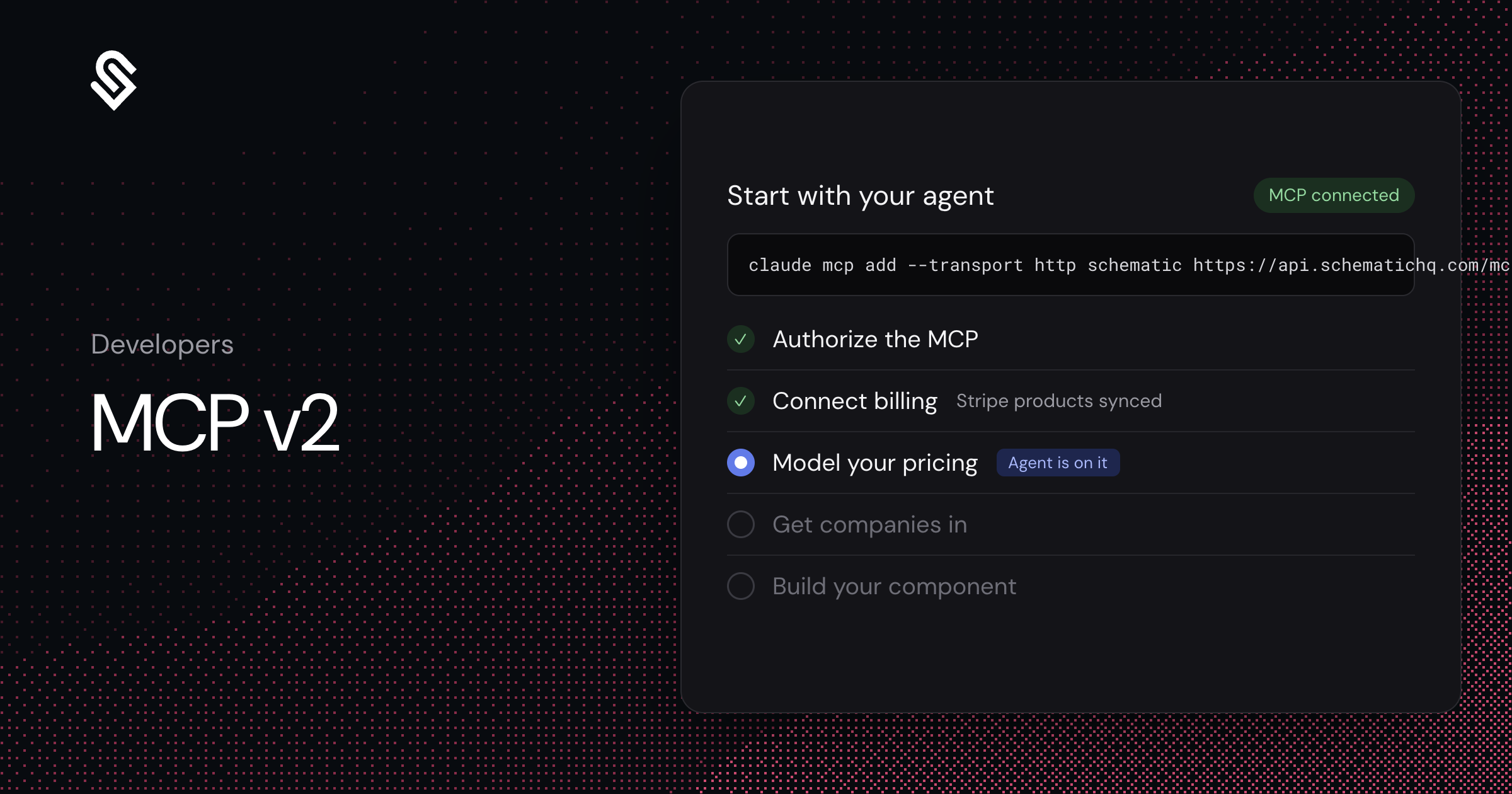
The Schematic MCP server connects to Claude Code, Claude, ChatGPT, Codex, Copilot, Cursor, OpenCode, and Antigravity with one command: claude mcp add --transport http schematic https://api.schematichq.com/mcp. Sign-in is OAuth, so there are no API keys to paste, and scopes follow your account permissions.
Skills over MCP carry the workflows. The onboarding skill takes a new account from zero to live. It finds your pricing page, proposes a model, creates the plans, credits, and add-ons once you approve, connects Stripe, imports your customers, and verifies flags and usage events. The model-pricing, import-companies, and implement-sdk skills do the same jobs for existing accounts, including wiring the SDK into your codebase. The new Quickstart in the dashboard mirrors the agent's progress, so any step can be handed back to a person.
Every tool carries annotations (read-only or destructive), and the feature tools now include update and delete. Setup guide: docs.schematichq.com/building-with-ai.
Usage Controls (Beta)
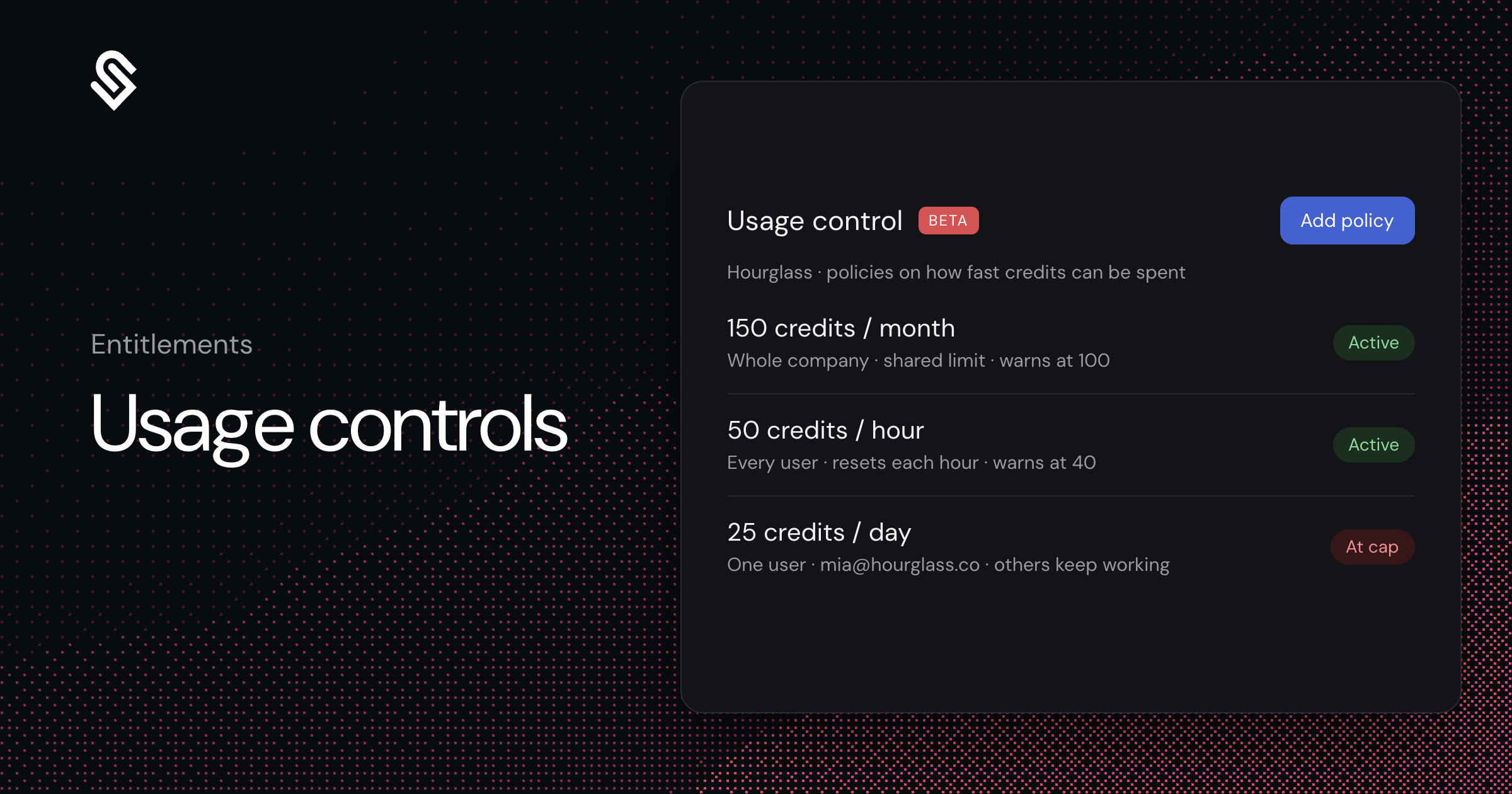
Usage controls are policies on how fast credits can be consumed, separate from how many credits a company has. A policy applies to the whole company, to every user individually, or to one named user, over an hourly, daily, weekly, or monthly period. Each policy has a limit and an optional warning threshold, so you can advertise a fair-use number and enforce a higher one.
Example: a 1,000-credit monthly commit, a 150-credit daily cap for the company, and a 25-credit daily limit on one power user. That user pauses at their cap, everyone else keeps working, and the commit stays intact. Warnings fire at the threshold. Usage pauses at the limit until the period resets.
Policies live on the company profile next to the credit balance, roll up per user on the Usage tab, and show in the customer portal, so your customers see the same numbers. Usage controls are in beta. Ask us to turn them on for your account.
Scheduled Migrations and Proration Control
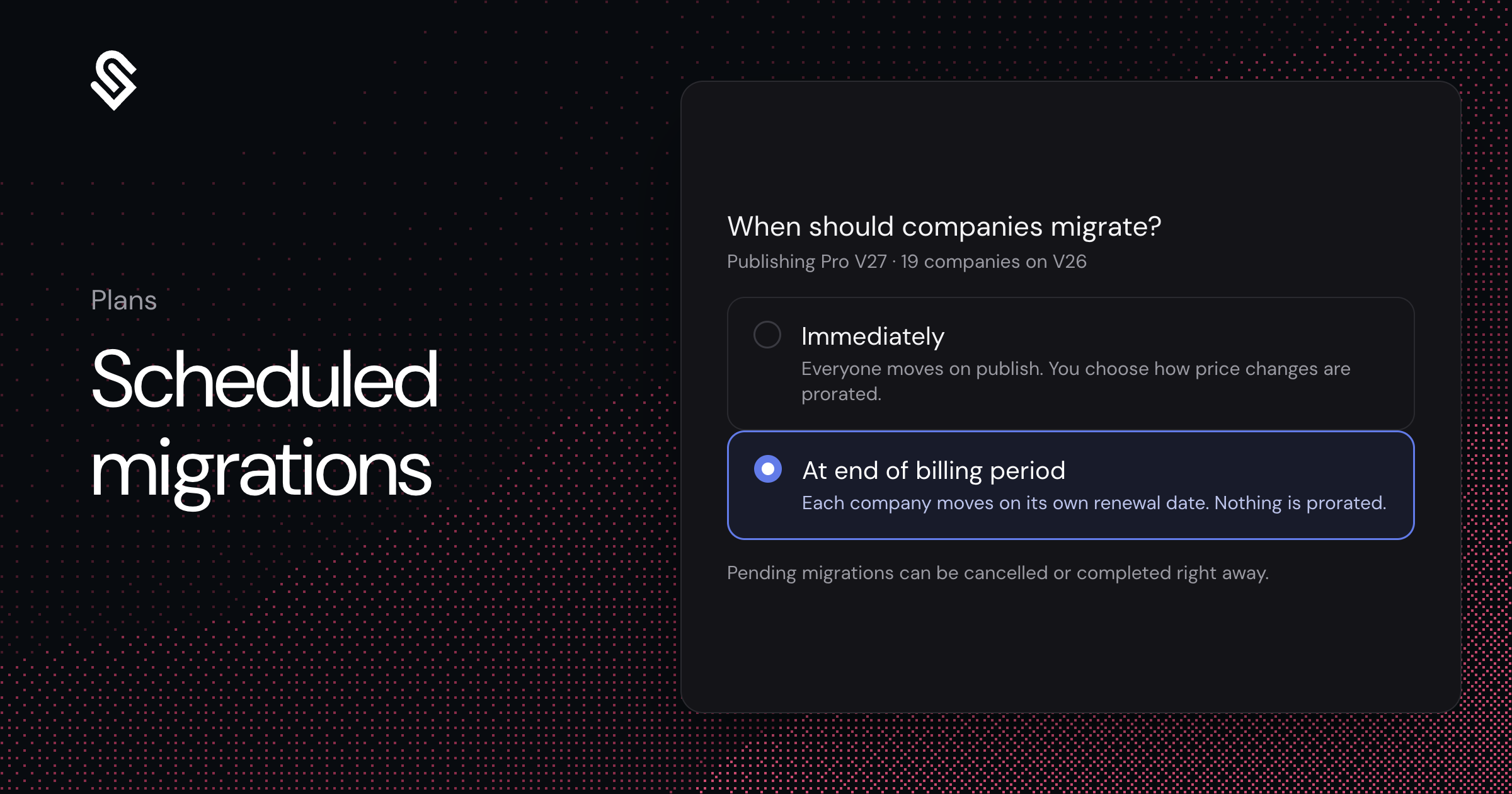
Publishing a plan version now asks when companies should migrate. Immediately moves everyone and updates Stripe subscriptions on publish. At end of billing period migrates each company on its own renewal date, so there are no mid-cycle billing changes and nothing is prorated.
When you migrate immediately and the new version changes prices, the wizard asks how to prorate: invoice the difference now, or add it to the next invoice. The wizard states the choice before you publish, along with how many plans and companies carry a price change.
Scheduled migrations show as Pending in the migrations list with a date per company. You can cancel them or complete the remaining companies right away. This works in the plan version rollout wizard and in standalone migrations.
Custom Billing Anchor
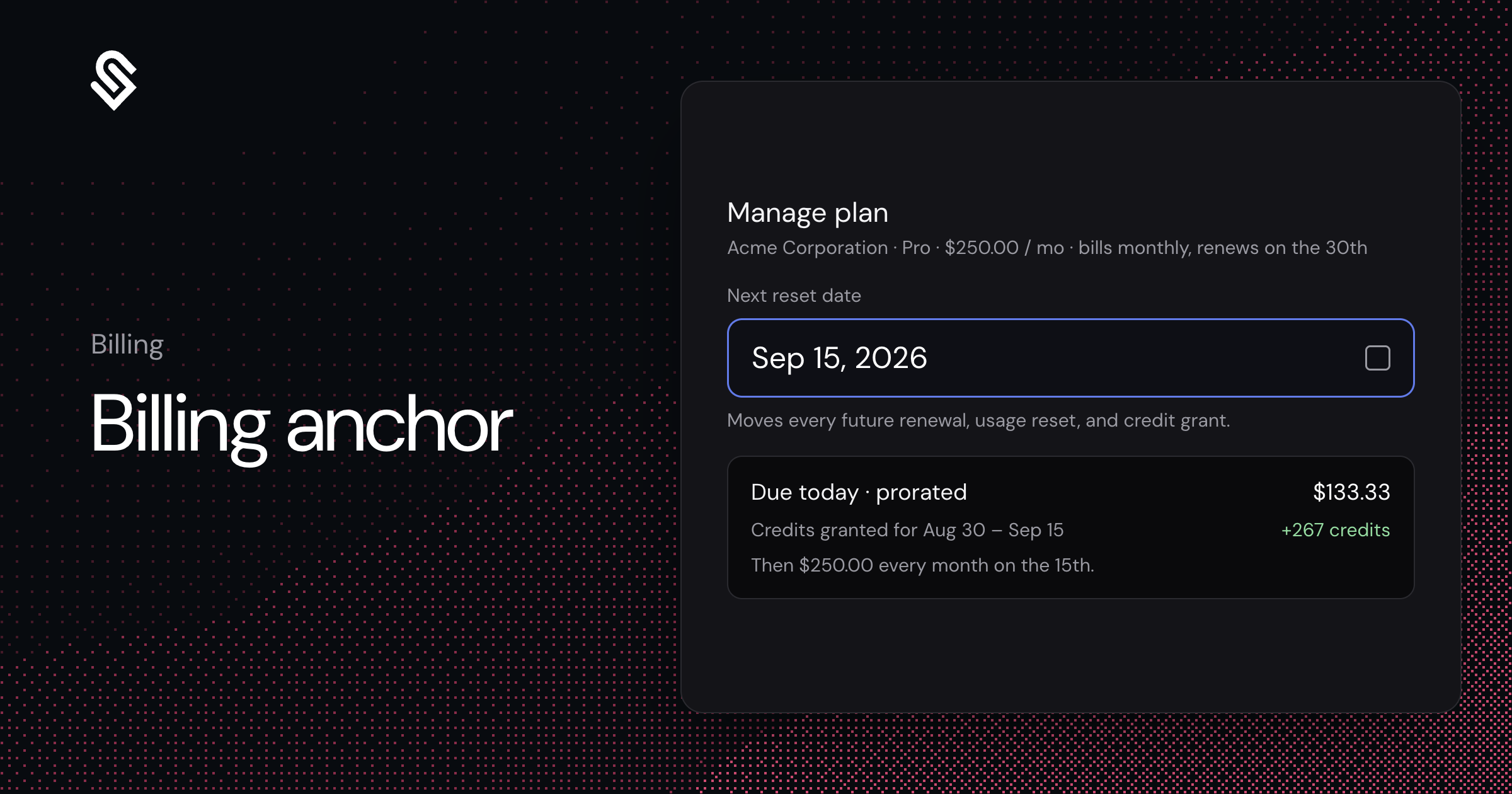
The billing anchor is now its own field. In Manage Plan, the Billing period section shows the interval and an editable next reset date. Editing it moves every future renewal, usage reset, and credit grant, and the subscription preview itemizes the proration: remaining time on the base fee, seats paid in advance, and credits granted for the partial period, counted in credits rather than dollars.
Custom plan finalization has the same control. Anchor to the activation date, or pick a custom date so the first period runs from activation to the anchor with a prorated first invoice. Deals that need co-terming or a calendar renewal date, such as renewing on January 1, no longer need a workaround.
The company's Subscription tab shows the anchor read-only. Everything here is available through the API, including the proration preview.
Credit Overages
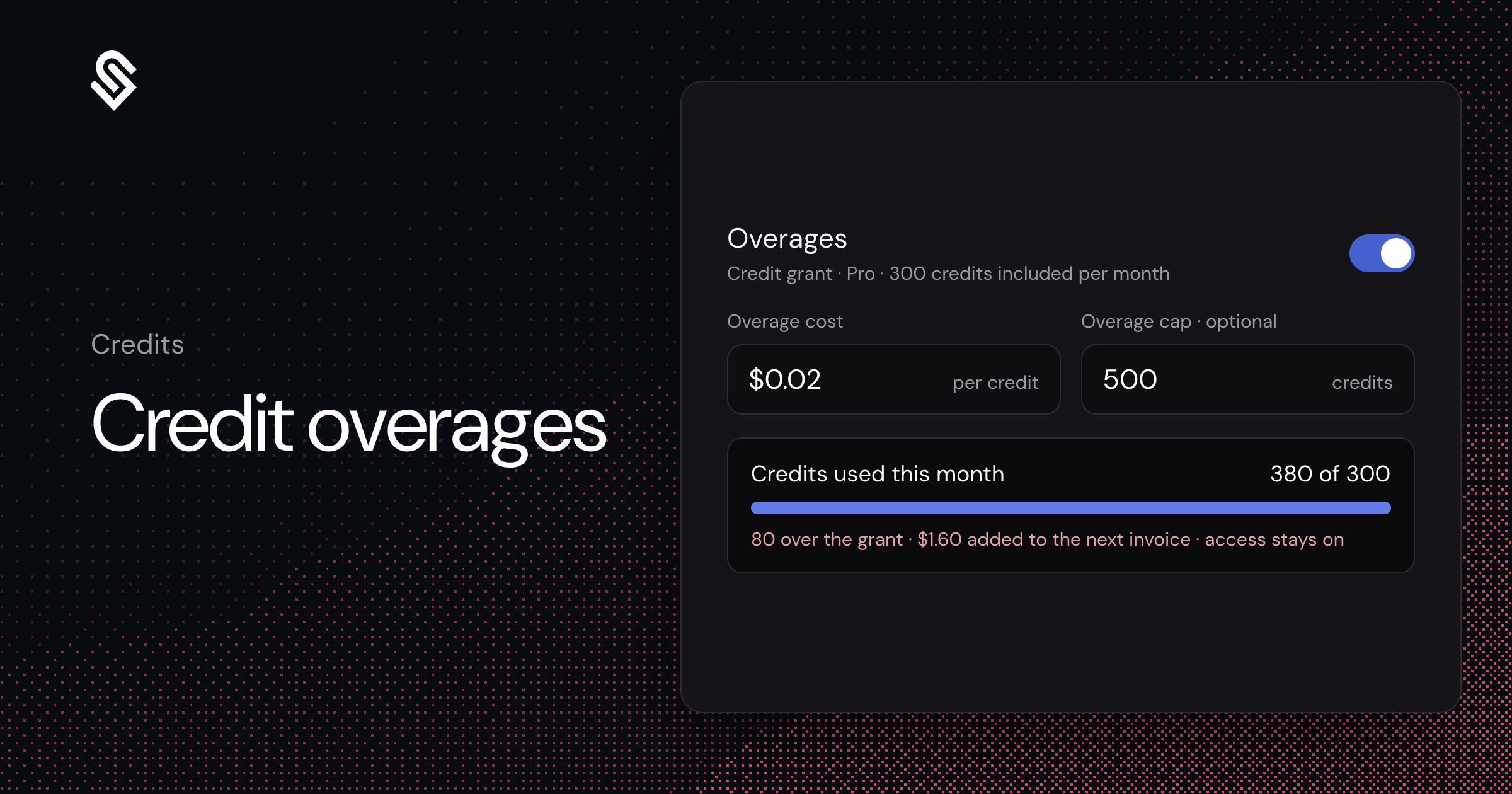
Credit overages bring the soft-limit model that feature entitlements already have to the credit balance. Invoice-billed accounts on net terms have no card to charge for auto top-up, and until now they were cut off mid-period when credits ran out.
Turn Overages on for a plan's credit grant, set an overage cost per credit (it defaults to the credit's cost basis), and optionally a cap. Once every grant is exhausted, flag checks keep allowing and consumption accrues at the overage rate. At the cap, checks deny. Accrued overage is pushed to your billing provider as an arrears line item at the end of the billing period, monthly, or daily.
The resolution order at zero is auto top-up if enabled, then overage, then hard stop. Components show the state: the usage meter reads "80 over limit · $1.60" and the plan card explains the rate. Existing grants default to Off.
In review now, rolling out in September.
Monthly Overage Invoices for Annual Plans
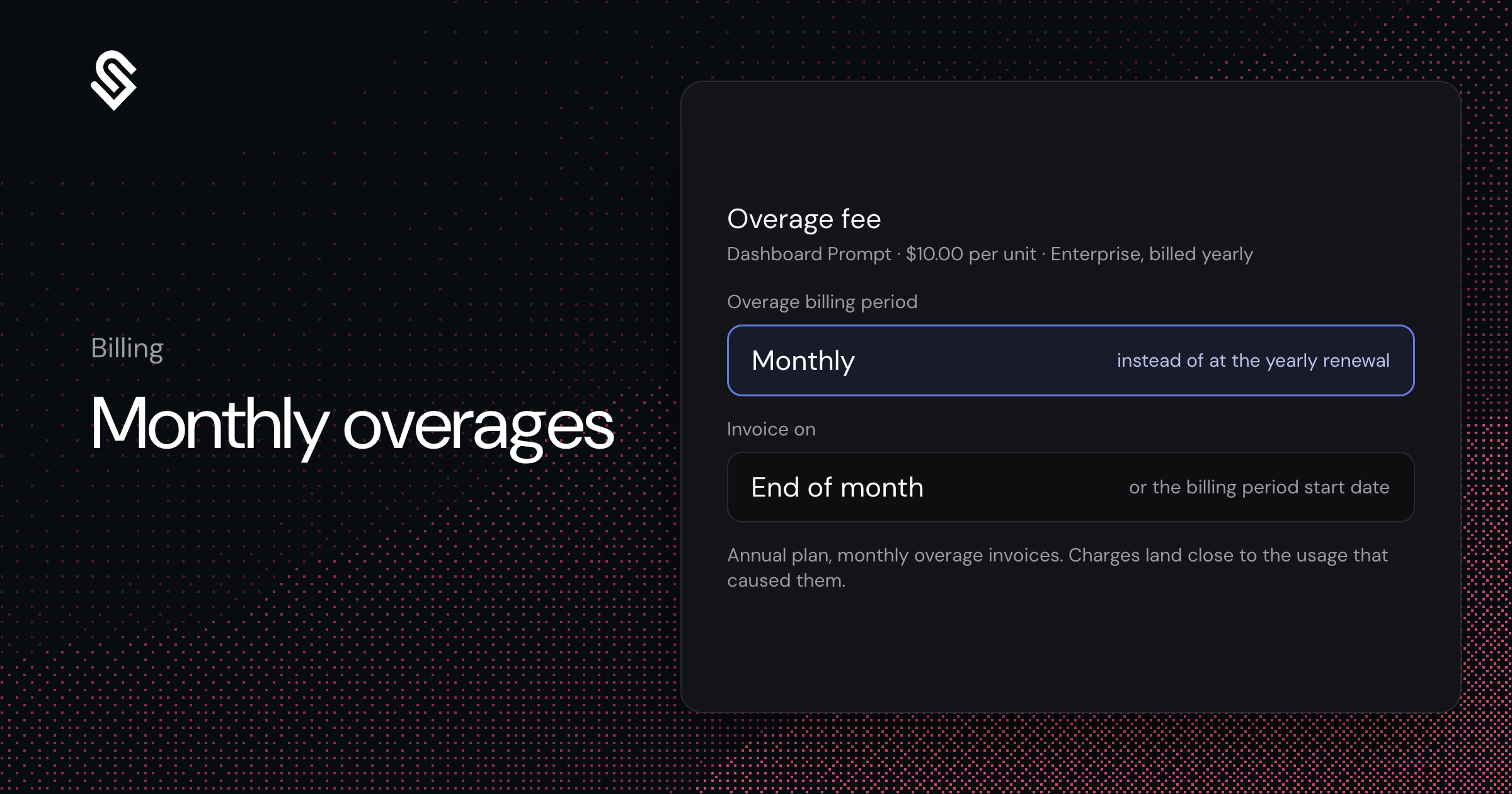
The Overage fee settings on a monetized entitlement have a new Overage billing period field. It defaults to the plan's billing period, so nothing changes unless you opt in. Choose Monthly and a second field sets when the invoice lands: on the billing period start date (an annual plan that started on the 12th invoices overages on the 12th of each month) or at end of month, to match how finance reconciles.
Monthly overage line items are pushed to Stripe on the annually billed subscription, so revenue is captured without manual invoicing and charges land close to the usage that caused them.
In review now, rolling out in September.
Pay by Invoice for Standard Plans
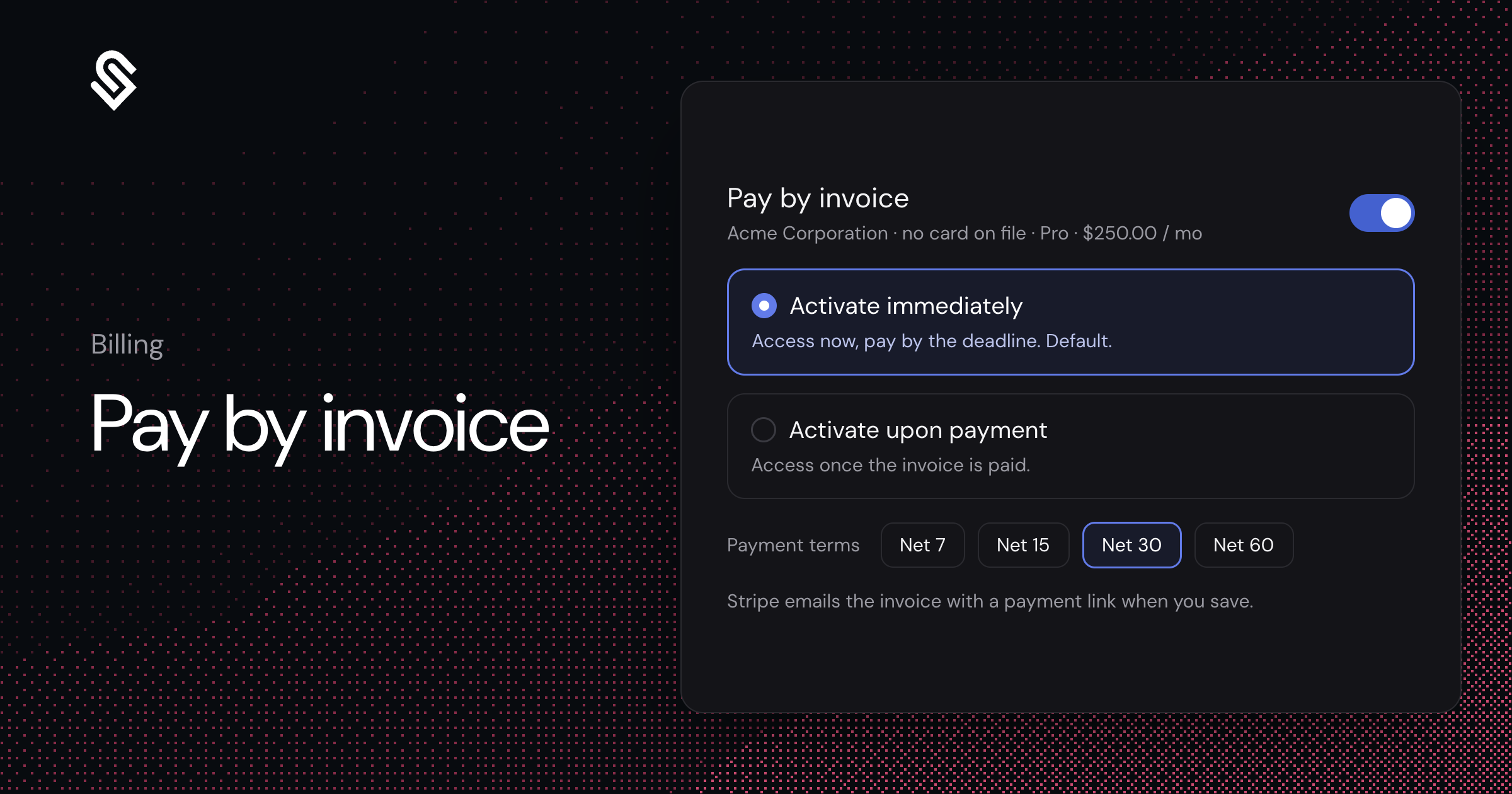
Manage Plan has a Pay by invoice toggle. Turn it on and the billing terms from custom plan finalization appear: activate immediately (the default, with access before payment until the deadline) or activate upon payment, and Net 7, 15, 30, 60, or custom terms that apply to the first invoice and every renewal. Save, and the subscription is created and the invoice is emailed to the company's billing contact with a Stripe payment link.
The company page shows a Plan invoice element with status, due date, payment link, and mark as paid. If an invoice goes unpaid past the terms, the company moves back to the environment's default plan. Self-serve checkout is unchanged: still card only.
Live now for every account.
Request to Join an Existing Organization
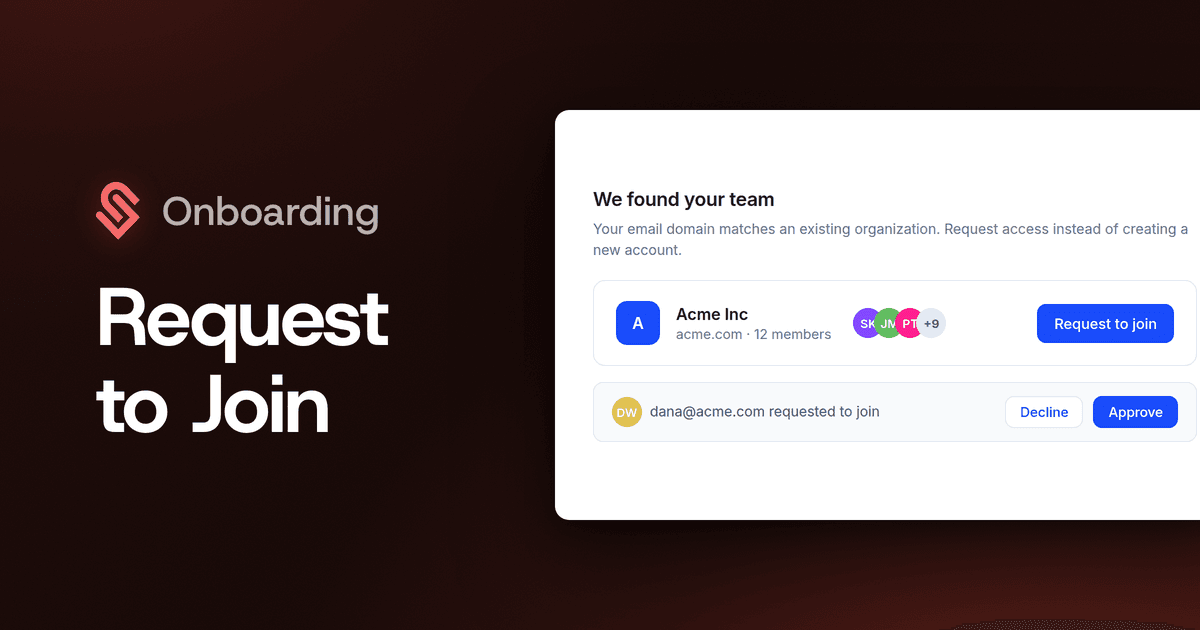
New signups with a matching email domain can now request to join your existing Schematic organization instead of creating a fresh account. They see the org, who's already in it, and a request button; admins approve or decline in one click from the members page.
This is opt-in per organization, and it ends the most common onboarding dead end — a teammate signing up solo, landing in an empty account, and wondering where the team's plans went.